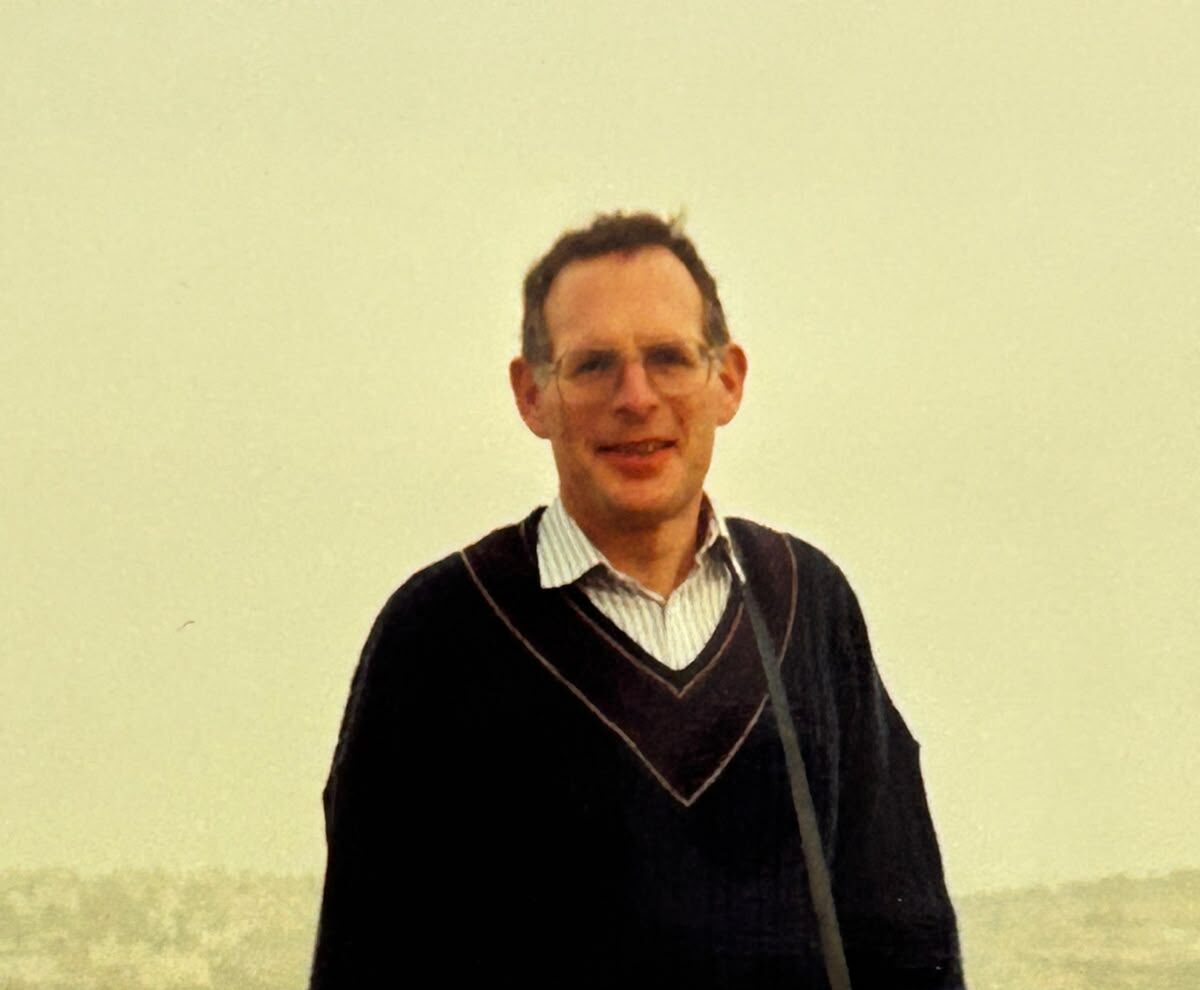
From a handful of like-minded people meeting in a living room to a thriving community that helped establish Masorti Judaism in the UK, Neil Kaufman remembers the extraordinary sense of possibility that made it all happen.
When Neil Kaufman looks back on the early days of Masorti Judaism in Britain, what he remembers most vividly is the enthusiasm. They were a small group of people with a shared vision of Jewish life, and they were determined to make it happen.
“We were so pioneering. It was great fun. Committee meetings were something everybody wanted to come to. Everybody wanted to be involved.”
It began with a conversation at Edgware Reform Synagogue, where Neil and his wife were members. Jaclyn Chernett, a fellow congregant, had become involved in informal meetings with Rabbi Michael Leigh, Michael Rose and others inspired by Rabbi Louis Jacobs. Masorti Judaism did not yet exist as an organised movement in Britain, but the ideas were already in the air.
Neil and Jaclyn had something in common. Both had grown up within the United Synagogue, and both cared deeply about Jewish education, particularly for children.
Neil had received a traditional United Synagogue Jewish upbringing, including his bar mitzvah, but had become dissatisfied with aspects of the Orthodox establishment. His first wife, who was not born Jewish, had converted, and he had decided not to pursue an Orthodox path to conversion. Yet Reform Judaism did not entirely feel like home either.
“I wasn’t comfortable with the Reform approach because it wasn’t my roots, and I wasn’t happy with the Orthodox system either. The American Conservative movement bridged the gap.”
Jackie encouraged him to join the informal meetings, often held at Michael Rose’s house.
“We were like minds getting together to talk about the things we loved.”
All were influenced by the thinking of Rabbi Louis Jacobs and the possibility of a Judaism that was deeply rooted in tradition while open to change.
Eventually Neil suggested to Jackie that they should establish their own synagogue.
From an alternative service to a new community
Their first step was modest. With the support of Rabbi Michael Lee, they proposed an alternative Shabbat service at Edgware Reform Synagogue. Not everyone welcomed the idea, but the synagogue council eventually agreed, on condition that the new service began later than the main one.
They obtained a Conservative siddur from America, made copies and began holding services.
Gradually, word spread. People who had grown up in United Synagogue communities, but were looking for something different, began coming along.
“We could see there were people who liked it.”
Paul Marmot, who had experience of Masorti Judaism in Israel, became involved, and the group decided the time had come to establish an independent congregation.
Their first service was held in the summer house belonging to Neil’s uncle in Stanmore. The setting was memorable: a room overlooking a lovely garden and a swimming pool, followed by a lovely kiddush.
The Jewish Chronicle had published an article about the upcoming service and described it as the first Conservative service in the UK.
Forty people turned up.
From the beginning, the new congregation drew on the abilities of its members. People rediscovered their Torah-reading skills, took responsibility for services and contributed whatever knowledge they had.
The community subsequently hired Edgware Maccabi Hall, holding Friday night and Shabbat services and gathering for the festivals.
But Jewish life was never just confined to the services themselves; it was community owned and led.
There were communal lunches, followed by talks on an extraordinary variety of subjects. Neil remembers one member describing her travels to China with the wife of Chief Rabbi Immanuel Jakobovits, Lady Amélie Jakobovits, including their difficulties finding kosher food.
The congregation was becoming a place where Jewish learning, friendship and curiosity flourished together.
A rabbi before a building
As the community grew, an important question arose: should they find a permanent building or appoint a rabbi first?
“We made the correct decision. We went for the rabbi.”
Rabbi Chaim Pearl, who was living in Israel and had come to lead High Holy Day services, offered to help find a suitable young rabbi.
At a yeshiva in Israel, he encountered a young Rabbi Chaim Weiner.
“I think he would be right for you,” he told the congregation.
“The rest was history.”
Rabbi Weiner arrived with his wife Judy, and Neil remembers them as an extraordinary fit for the developing community. Their relationship became a personal one too: Neil was sandek at the brit Milah of one of their children.
With Rabbi Weiner’s leadership, the congregation grew rapidly. Eventually it acquired its own premises in Edgware and reached around 200 families.
Its influence extended well beyond Edgware. A satellite congregation was established in Hatch End, later becoming part of Mosaic. Another community, Kol Nefesh, emerged following disagreements within the original congregation. In time, Masorti Edgware joined with the Borehamwood community to become SHEMA.
What began as an experiment had become part of the foundations of a wider Masorti movement.
Helping people discover what they could do
Among Neil’s happiest memories are the ways in which members grew in confidence, knowledge and Jewish practice.
The community brought together people with very different levels of Jewish education, from those who could already lead services and read Torah to those who had almost no background in Jewish learning.
“We had people with no Yiddishkeit whatsoever, and we found ways to move people along to where they could understand their heritage and become much more fluent in Jewish practise and experience.”
One example. An early sermon was delivered by Paul, an accountant who had little formal Jewish education and who later became the congregation’s treasurer.
The community encouraged him simply to read the weekly sedra and consider what it meant to him. Luckily, the parasha that week was Miketz (מִקֵּץ), where Joseph advises and implements the storage of grain for the coming lean years. Paul brought his professional understanding as an accountant to the biblical story, finding an interpretation that others had not considered.
For Neil, this captured something essential about the congregation: people did not have to arrive with extensive Jewish knowledge to have something valuable to contribute.
He also remembers teaching two boys with severe learning difficulties for their bar mitzvahs.
“When they had their bar mitzvahs, you couldn’t tell the difference. They shone.”
These were among the achievements of which he remains most proud.
There were other joyful memories too, including extraordinary Purim shpiels, Simchat Torah celebrations and the sheer pleasure of building a community together.
Disagreements and lessons learned
Not everything went smoothly. Neil particularly regrets the divisions that developed within the congregation over the pace of change in religious practice, around disagreements around women wearing tallitot.
His concern was not necessarily about the direction of change, but how quickly it was happening.
“My advice is when you have opposing views, each side needs to take a step back and appreciate the other view. For me it was, look guys, you’re running too fast for me. Just slow it down. Give us a little time to catch up. You want Mashiach now.”
He believes that if the community had managed to move more slowly, it might have remained together and emerged stronger.
“Mistakes were made on both sides.”
It is a lesson he would pass on to any community facing disagreement today.
“When you have opposing views, each side needs to appreciate the other view.”
For Neil, the story of Masorti Judaism’s beginnings is not simply about establishing synagogues or buildings. It is about people who wanted a different kind of Jewish life and were prepared to create it themselves, learning and sometimes making mistakes along the way.
Looking back, he feels extraordinarily fortunate to have been part of it.
And his advice to the next generation of Jewish pioneers is wonderfully simple:
‘If you have a dream, follow it. Find like-minded people and spread the word.’
In October 2021, the congregation approved a merger with the Elstree & Borehamwood Masorti Community, which became effective in December 2021, the merged congregation adopting the name South Herts and Edgware Masorti (SHEMA).
Jaclyn Chernett and Michael Leigh described the need for the changes in this publication from 1986
In it, Jaclyn writes:
‘Conservative Judaism is not Reform Judaism. Neither is it Orthodoxy. Nor does it represent a compromise between Orthodoxy and Reform.
It demands a positive approach to what it holds is authentic, living Judaism. It is not permissive. It does not offer `carte blanche’ to those who wish to change the laws of Kashrut or Shabbat, for example, for the sake of convenience. It does give direction on all issues, and it is for this reason that British Jews, searching for answers within a traditional framework, must now have access to an independent movement in this country, without having to resort to a radical change which they are not happy to accept.
If the movement encourages more Jews to love their Judaism and to embrace it in a way which brings meaning to them it must flourish as a new alternative on the British scene and must be welcomed with joy. ‘