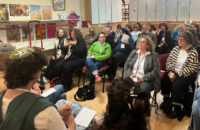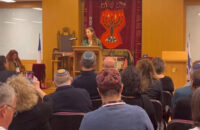
Nearly 200 people from across Europe and beyond gathered for the 20th anniversary of Masorti Europe, sharing ideas, prayer and a renewed sense of connection.
Masorti Judaism can be difficult to define in a few words. But in Paris, we could see the difference it makes, in young people finding their voice, communities building Jewish life, and people finding belonging and support across the movement.
Nearly 200 people came together for the 20th anniversary conference of Masorti Europe, representing more countries than ever before. It felt like one of our most international gatherings yet, with a strong sense of connection across Europe and beyond.
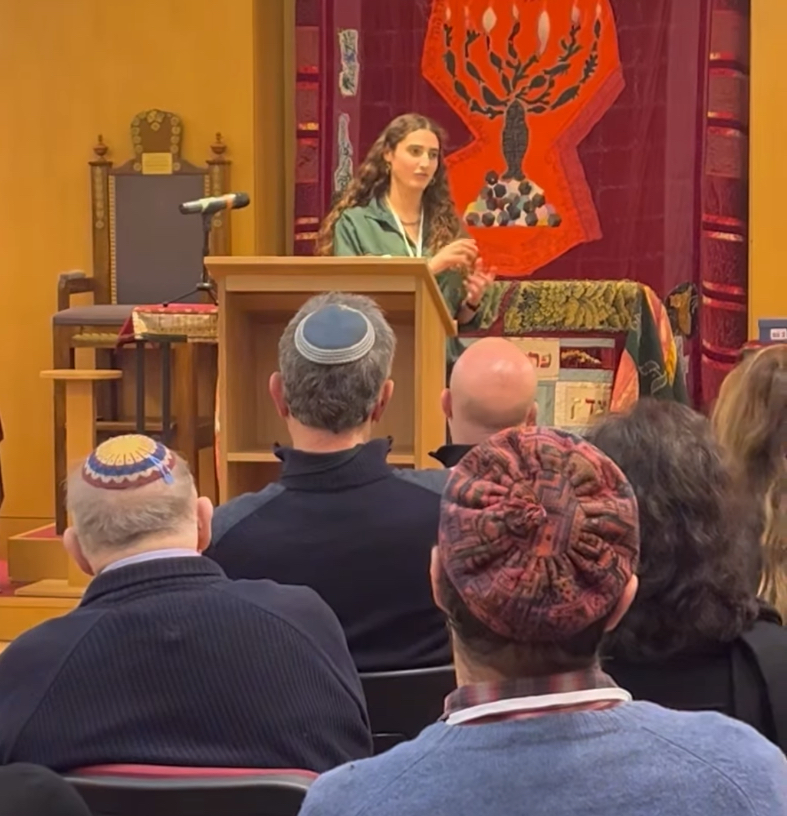
The conference opened with a powerful speech from Izzi of Noam UK about what Masorti and Noam stand for, and why young people need a voice. Young people listen to one another, she said, because adults do not always listen to them. Margo Gold, Chair of Masorti Olami, told her: “Izzi, you are a hard act to follow! Someday, when I grow up, I want to be just like you!”
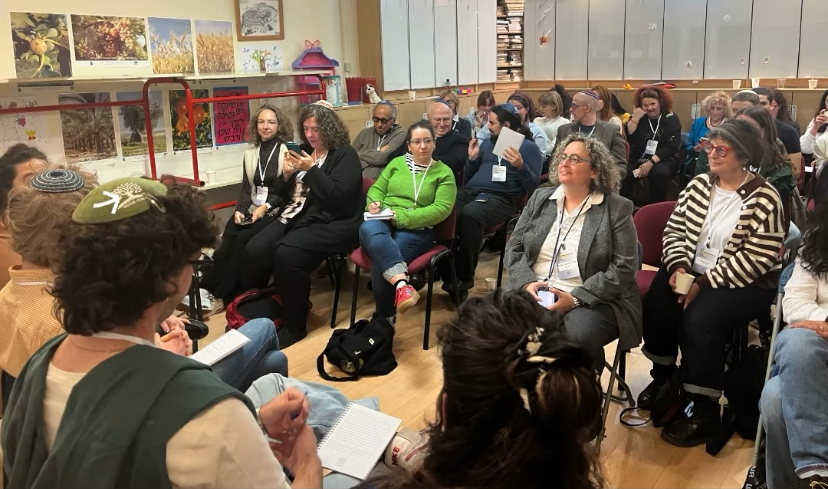
Finding an agreed definition of Masorti Judaism was a recurring theme. In Bruce Rigal’s session, he drew on Rabbi Adam Zagoria-Moffet’s two questions: Do you believe halakhah is binding? And do you believe it changes slowly over time through rabbinic legislation? If you can say yes to both questions, you’re Masorti. From the bimah, Dr Yizhar Hess said he liked Masorti UK’s simple definition: “Traditional Judaism for Modern Jews.”
Rabbi Gesa Ederberg offered another way to look at who we are: between black and white, there is not grey but a rainbow. Masorti is not a halfway point between other movements. It is an authentic Jewish approach with room for a rich diversity of practice and belief.
Rabbi Chaim Weiner, Av Beit Din of the European Masorti Bet Din, led a session exploring differences between Sephardi and Ashkenazi approaches to Halakhah.
For Martha Limburg, Masorti Judaism UK’s Director of Communities, the weekend highlighted how much communities can learn from one another. “We share many of the same challenges, questions and successes, and we are stronger together,” she said. “There’s always someone who can help us think something through or share their experience of something similar.” She chaired a fascinating session investigating new creative ways of building community beyond bricks and mortar.
Martha was also inspired by Rabbi Jacob Blumenthal’s description of Masorti as a “both-and” approach: holding Jewish tradition and modernity, concern for the Jewish people and the welfare of all humanity, together.
The conference welcomed Etz Haim, a new Kehilla in Genoa, and explored how communities can grow in different settings. Martha Limburg chaired a session on creative ways of building community beyond bricks and mortar. Nic Schlagman, Projects & Community Coordinator at Masorti Europe, praised the leaders “moulding and developing undeniably Masorti yet distinct communities all across Europe” and the movement leaders who came together both to lead and to learn from those doing the work in smaller communities.
The voices of young people were prominent throughout the conference. Dr Wanda Teplitsky, President of Masorti Europe, particularly enjoyed seeing the large youth delegation from Marom and Noam take an active role. She also welcomed the participation of communities across Europe, including those still developing, and of partner organisations such as the Rabbinical Assembly, MERCAZ, the rabbinical schools and International FJMC. Gill Caplin, Masorti Europe’s founder and first chair, paid tribute to Wanda’s dedication.
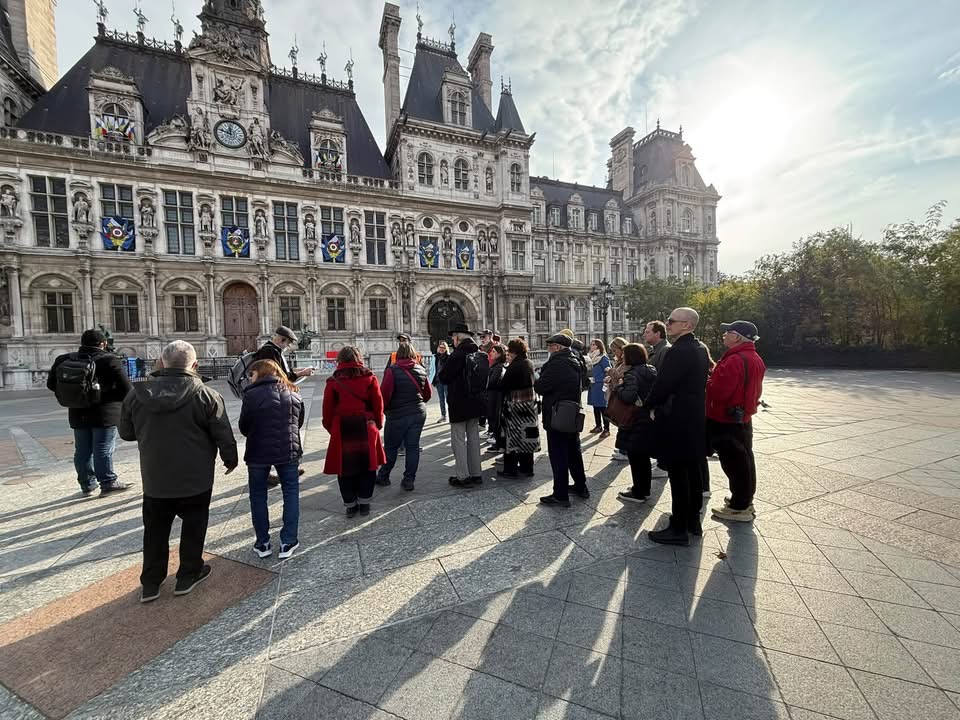
Participants also explored the Jewish history of Paris on a tour led by Rabbi Chaim Weiner. Shabbat brought participants together across two locations before the conference reconvened on Sunday. Ashkenazi, Sephardi, French and familiar Masorti UK minhag came together in the services. Rabbi Jeremy Gordon delivered a powerful Dvar Torah based on Walter Benjamin and his essay The Work of Art in an Age of Mechanical Reproduction, exploring the idea of “aura” and its connection to Jewish life.
He said: “Judaism is all about aura: the ability to truly encounter the reality of the thing that is directly in front of you, on Shabbat in particular, and particularly when we give a blessing from one human being to another human being.”
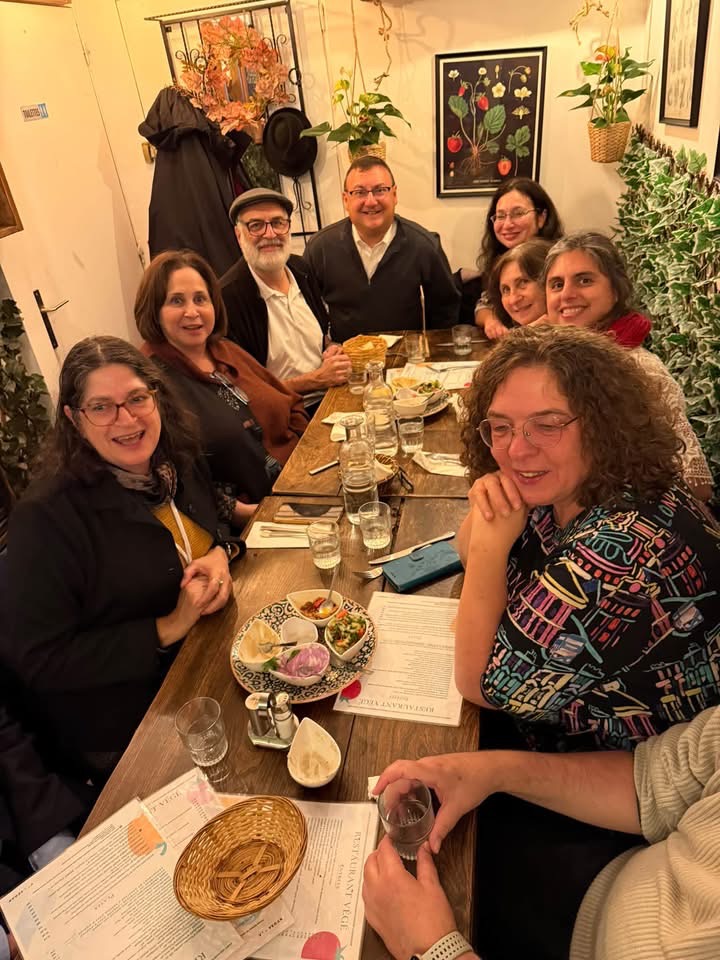
For Jeremy Kelly, former Chair of Masorti Judaism UK and former trustee of Masorti Europe, the shared prayers were a highlight. He first attended a Masorti Europe conference in Valencia around 2005, when there were about 20 people. “It was extraordinary to attend this week’s 20th anniversary conference and find more than 200 people gathered from across Europe and around the world,” he said. “People from so many countries singing together, sometimes in the very same tune, was deeply uplifting.”
Jeremy also reflected on seeing Rabbi Josh Weiner, whom he remembered running around Edgware Masorti as a child, now leading his own community in Paris. Rabbi Josh spoke about the potential for blessing that Jewish communities carry, and the responsibility to contribute to the world with modesty and kiddush Hashem.
The conference made space for conversations about the very different realities facing Jewish communities. Aaron Conway, Director of Noam UK, spoke with his Ukrainian counterpart about the possibility of an exchange between their young people. It cannot happen at present, but they hope it may be possible in the future.
Aaron was struck by how familiar Kabbalat Shabbat and Havdalah felt across languages and cultures. He also described the perspective gained from hearing about the Ukrainian community’s experience: its members feel safe wearing Jewish symbols in public, while living with the realities of war and having nowhere safe to go when sirens sound. Such conversations brought home both the different challenges communities face and the importance of meeting in person.
For Tehilla Ruben, Interim CEO of Masorti Olami, the weekend was an experience of belonging. “This Shabbat, this weekend, here with all of you – that’s exactly what I felt. At home. With almost 200 family members and friends,” she said. She urged participants to keep building on the relationships formed in Paris: “We are stronger together.”
That sense of connection was echoed by Jacob Blumenthal, Chief Executive Officer of the Rabbinical Assembly and the United Synagogue of Conservative Judaism. He described it as “thrilling to be together with lay leaders and rabbis from across Europe” and to see communities embracing Jewish tradition while helping it evolve to meet today’s reality.
Attendees left Paris encouraged by the strength of our connections, the breadth of the movement and the confidence of the next generation. It may not always be easy to define Masorti in a sentence. But across the conference, in its learning, its services, its communities and its friendships, we could see the difference it makes.