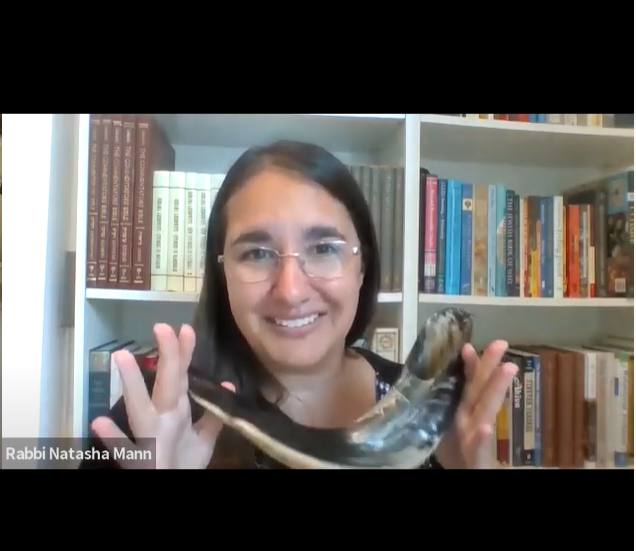
Rabbi Natasha Mann reflects:
In the final chapter of Mishneh Torah, Laws of Repentance, Maimonides turns from the technicalities of law to write instead about the heart of it all: love of God.
I have long characterised this chapter in terms of his urgency about proper love of God. It is not fitting, he writes, to serve God out of fear or out of wish for reward, even when that fear or reward might be about divine punishment or the life of the World to Come. Likewise, he adds a little later, occupying ourselves with Torah and mitzvot should be done lishmah (for its own sake), and not to obtain any carrot or avoid any stick.
Instead, Rambam urges, we should instead be obsessed with God like a love-sick young man pines after his beloved (a metaphor that interestingly inverts the usual genders of the theological love-match).
Speaking of Rambam and the gender of this chapter: he keeps returning to a category of people including women, children, and “amei ha-aretz” – regular folk of the land. In the beginning, Maimonides claims that these are the kinds of people who serve God out of fear, “until their knowledge increases and they serve out of love”.
That point is revisited in Hilkhot Teshuvah 10:5, quoting Rav in the Talmud: “One should always occupy oneself with the Torah [and mitzvot], even when it is not lishmah – because out of that which is not lishmah will come that which is lishmah.” This is why, Rambam adds, one may teach them (children, women, and regular folk) to serve due to the carrot or stick: because, gradually, their knowledge will grow and their wisdom will increase, and when they understand, they will begin to serve out of love.
Putting aside the unnecessarily gendered nature of Rambam’s worldview, the underlying principle here is fascinating. His urgency about proper love of God is undercut by the reminder of Rav’s perspective. It is better to do mitzvot, to participate in ritual, to occupy oneself in Torah, for its own sake and for love of God. But if we assume that it may be difficult to begin with perfect intention, then it is better to begin than to wait. Perfect intention should not be the level to which we aspire to begin occupying ourselves with Torah. If it were, most of us would never get anywhere.
I find this a profound reminder this time of year. There are heights to reach towards. There is such thing as relationship with that which is beyond us. Rambam himself states that the highest level he can imagine is one that even the wise may never reach: that of our Father Abraham. But even Abraham was once a boy in an idol shop, before being called to step outside and follow God’s into the wilderness.
May we all be blessed to touch on the love of the divine.
And may we all remember that the journey must begin, even in imperfect shoes.