Day 1. December 1. Setting The Intention
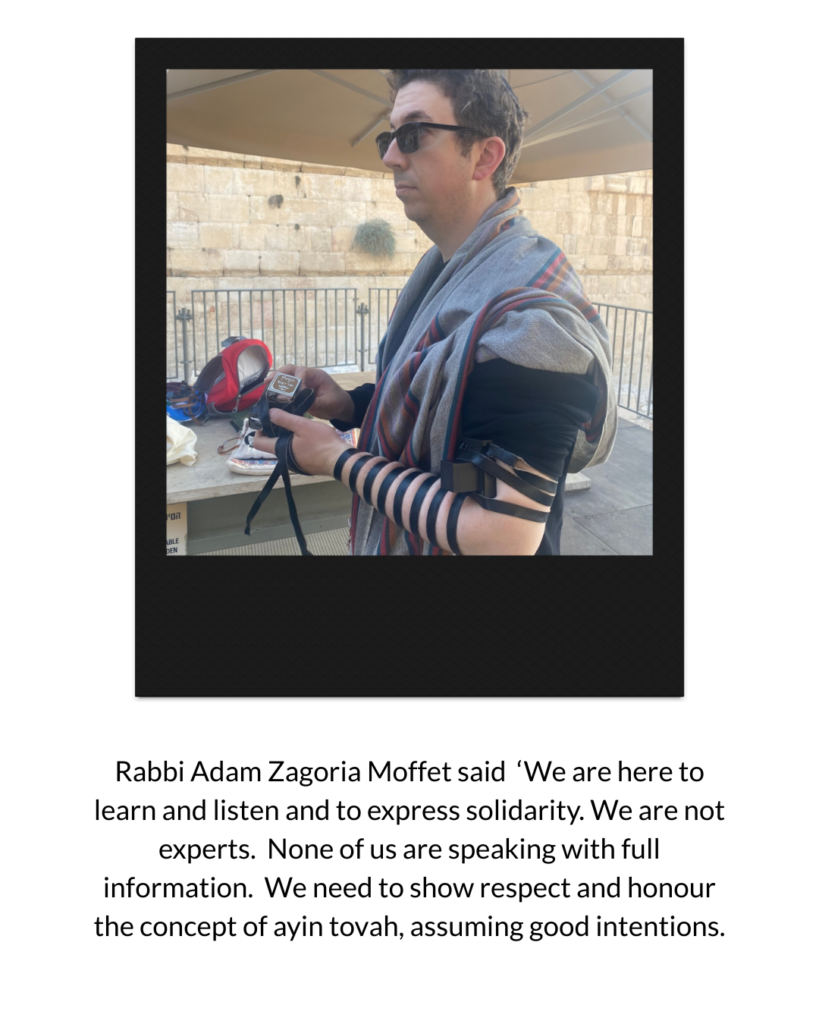
On the bus from the hotel in Jerusalem, Rabbi Adam Zagoria-Moffet, set the intention for the entire journey. He reminded us that we had come to Israel not as experts but as listeners. He placed the programme in its historical and geopolitical context, grounding us in humility. “We won’t leave here understanding everything,” he said, “but we can show respect, patience, and ayin tovah — a generous eye, giving others the benefit of the doubt.”
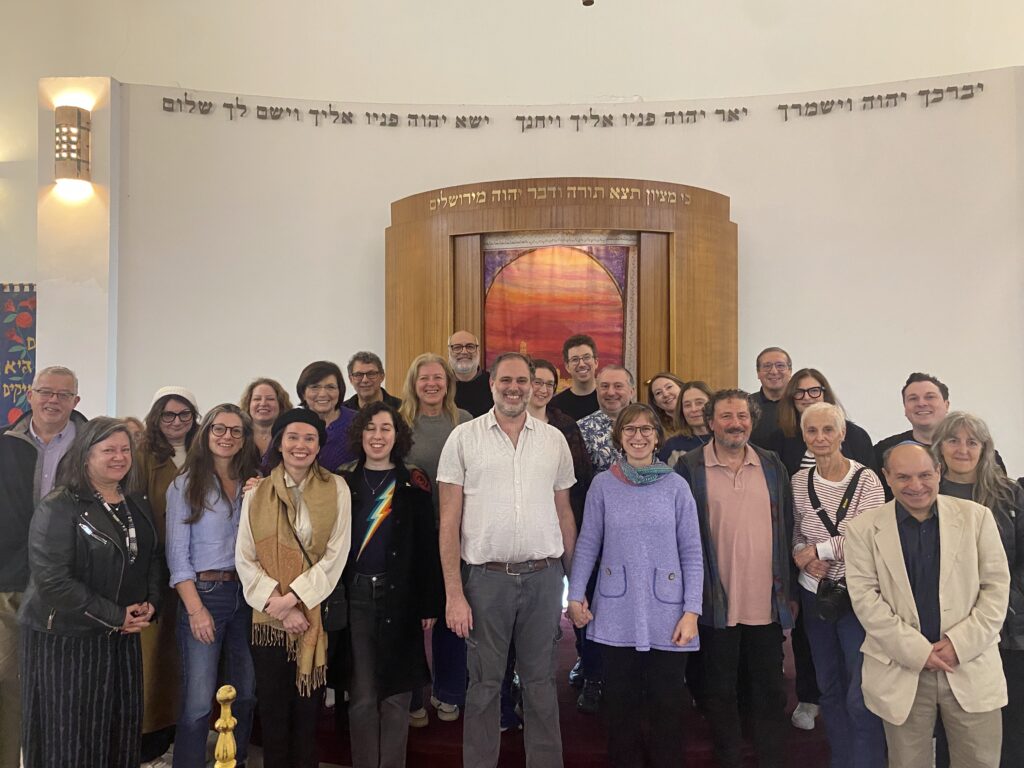
We were en-route to our first stop, a flagship Israeli Masorti synagogue: Moreshet Avraham in Jerusalem, led by Rabbis David Goodman and Amirit Rosen.
Fifty years of persistent work has made it part of a network now nearing 100 Masorti kehillot across Israel, a movement insisting that one can be both traditional and modern, rooted and compassionate, committed to Halachah and open to the world.
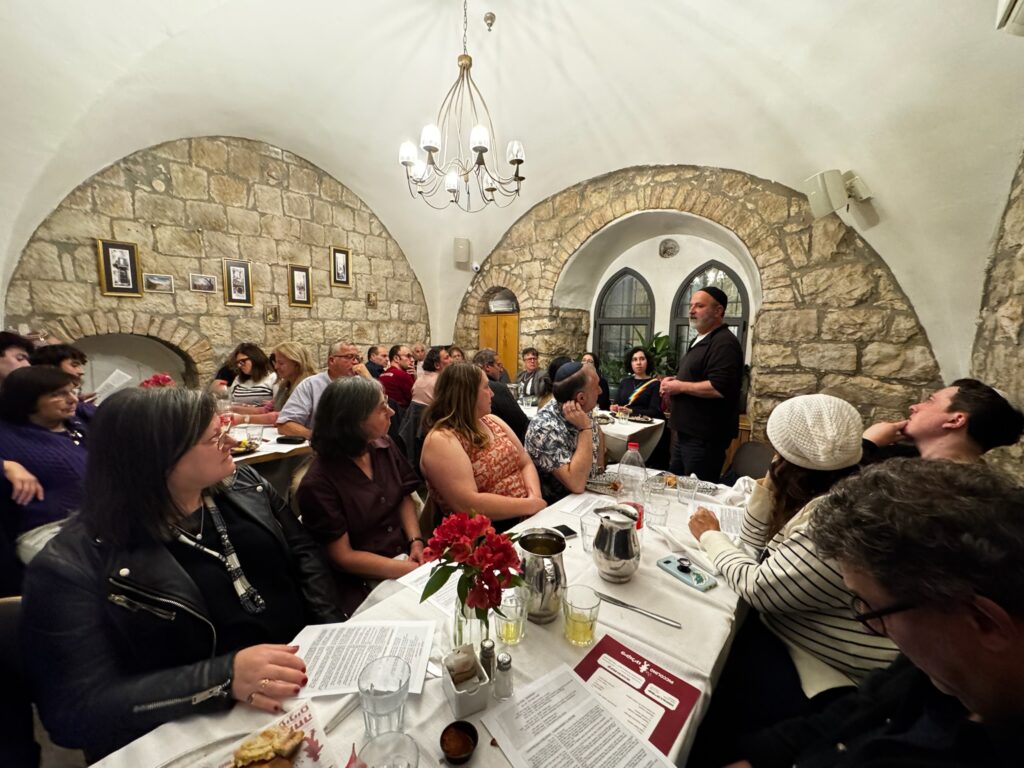
After dinner, we studied texts with Rabbi Joel Levy of the Conservative Yeshiva, part of the Fuchsberg Jerusalem Center. who charged us to articulate a Masorti Zionism that stands courageously against extremism “on every side”.
We were joined for dinner by two young Masorti gap-year students who shared their enthusiasm for what they were learning in Israel. They radiated energy and optimism.
We braced ourselves for the next morning.
Day 2. December 2. Entering The Trauma Zone
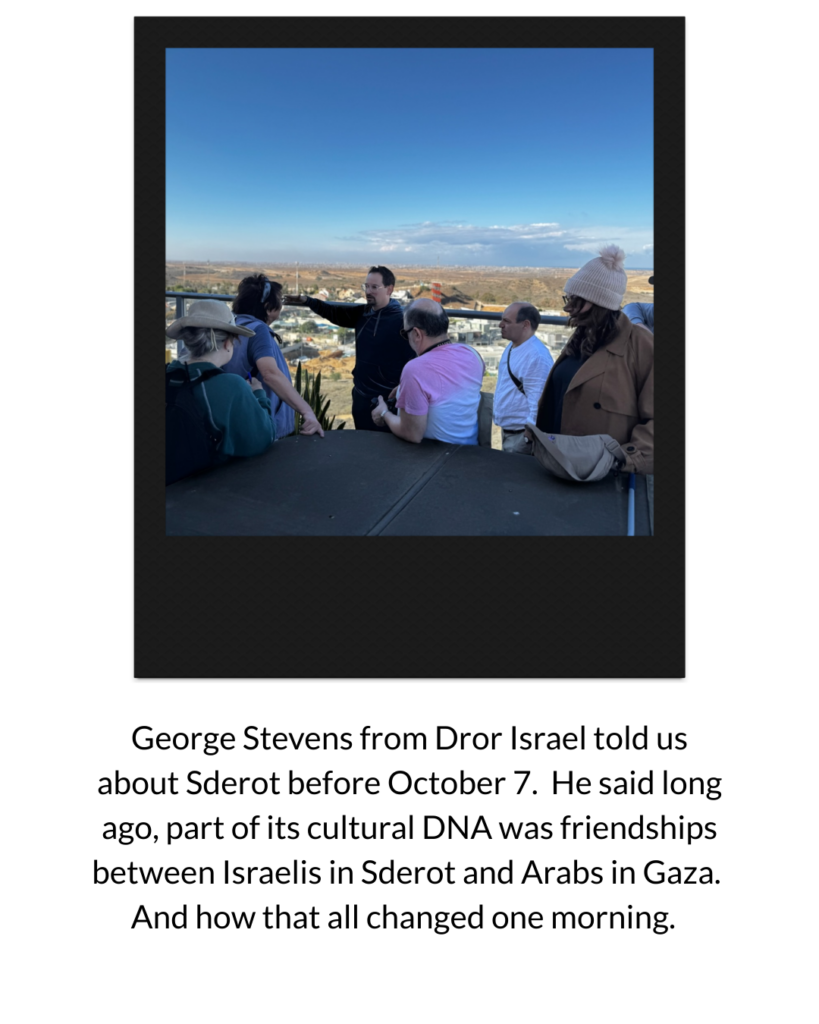
From the 10th-floor balcony of an urban kibbutz, Gaza seemed impossibly close. A bullet hole above our heads marked the attack; luckily Hamas failed to penetrate this building.
Here we met George Stevens, founder of the kibbutz and a member of the Dror Israel movement. On 7 October, he was away, frantically messaging friends trapped inside as terrorists attempted to break in.
George spoke to us from the balcony of the kibbutz block, surrounded by children’s toys. He told us about his work with WeAreMENA, connecting young leaders from across the Middle East, which offers a counter-narrative to despair:
“Build networks of moderates. Create leaders who see one another as human. Lay the foundation for a warm peace.”
Then he took us to the Sderot Police Station.
The Sderot Police Station Memorial
We stood before 18 tall pillars commemorating those who fell defending the city — chai, the number of life. The site is now a kind of pilgrimage for Israelis, a symbol of heroism amid horror.
We were fortunate to be accompanied by Tehila Reuben, Deputy Director of Masorti Olami and MERCAZ Olami. Over lunch, Tehila spoke to us about the global Masorti movement — how Masorti Olami, together with Masorti Israel and our communities in the US, Canada, Europe and Latin America, forms a network of 800+ egalitarian, traditional communities across the world. She reminded us that our Masorti synagogues in the UK are part of this same global family, bound not only by shared values but by shared responsibility.
Kibbutz Reim and the Nova Festival
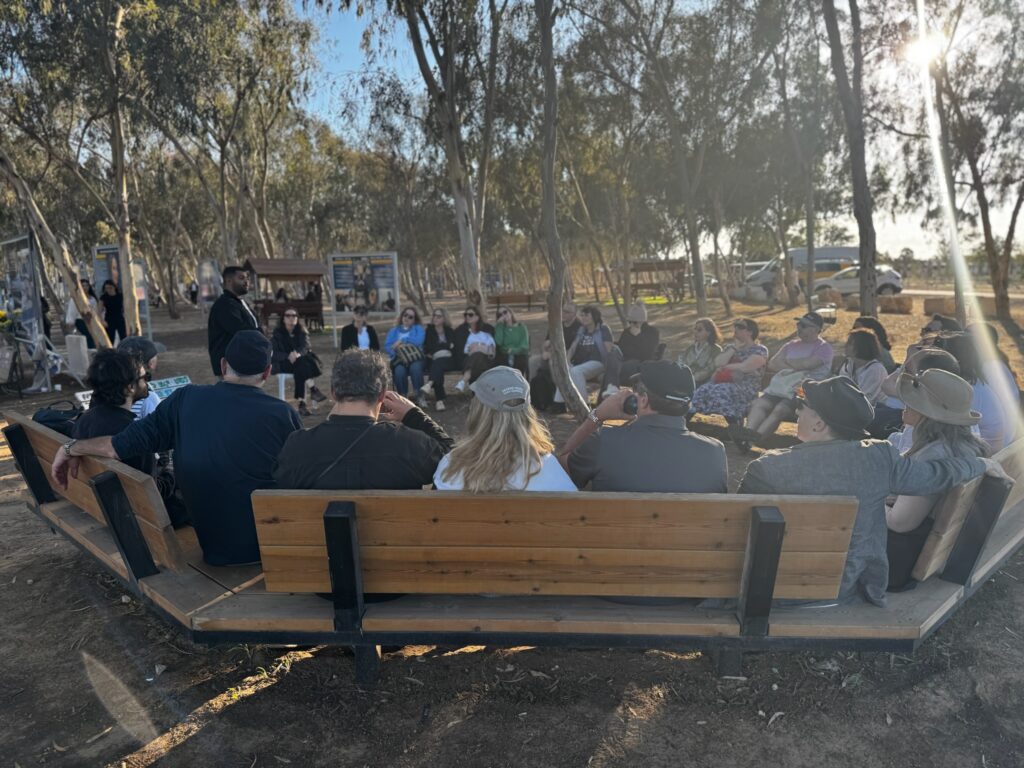
Zohar Livni Mizrachi, head of the Va’ad (governing council) at Kibbutz Reim spoke to us about events on that day and since. She showed us around the now peaceful kibbutz. We learned how within Kibbutz Reim itself, outside the festival site, the violent assault led to the deaths of at least seven kibbutz residents and six members of Israeli security forces during the fighting
90% of its residents have returned following months of internal displacement. ‘Our teenagers wanted to come home’ Zohar said. She said all signs of the devastation have been cleaned up except for the bullet holes in the trees. Her focus was on moving forward and ensuring the kibbutz was rebuilt to face the future.
Just metres away, we entered the Nova music festival memorial, a field transformed into a tribute to the 370 people murdered there. The 232 road, now known as The Road of Death, featured prominently in the incredible testimony of Daniel Sharabi, a young man who used his training as a medic to save many lives on 7 October and has since devoted his life to working to care for the survivors’ mental health.
You can read about how a tube of ChapStick can save your life in his incredible story here.
Sde Nitzan and Tseilim Base
As the sun set over the Negev, members at Kibbutz Sde Nitzan offered us hospitality and told us why they refuse to leave their kibbutz. Their home is a Masorti moshav founded in the mid-1970s largely by American and British Olim, in the Gaza envelope.
Finally, we had a BBQ dinner at a nearby army base. By the end of the day, our group was exhausted.
Day 3. December 3. Creating Hope and Healing
The morning brought a different kind of courage. We met a leading voice from Achim L’neshek, the reservist-led movement that protested judicial reforms in early 2023 and, on 8 October, pivoted into one of Israel’s largest volunteer relief efforts. Their work has pivoted again to train observers for the polling stations before the 2026 election, to protect the democratic process in Israel.
Last moments at Hostage Square
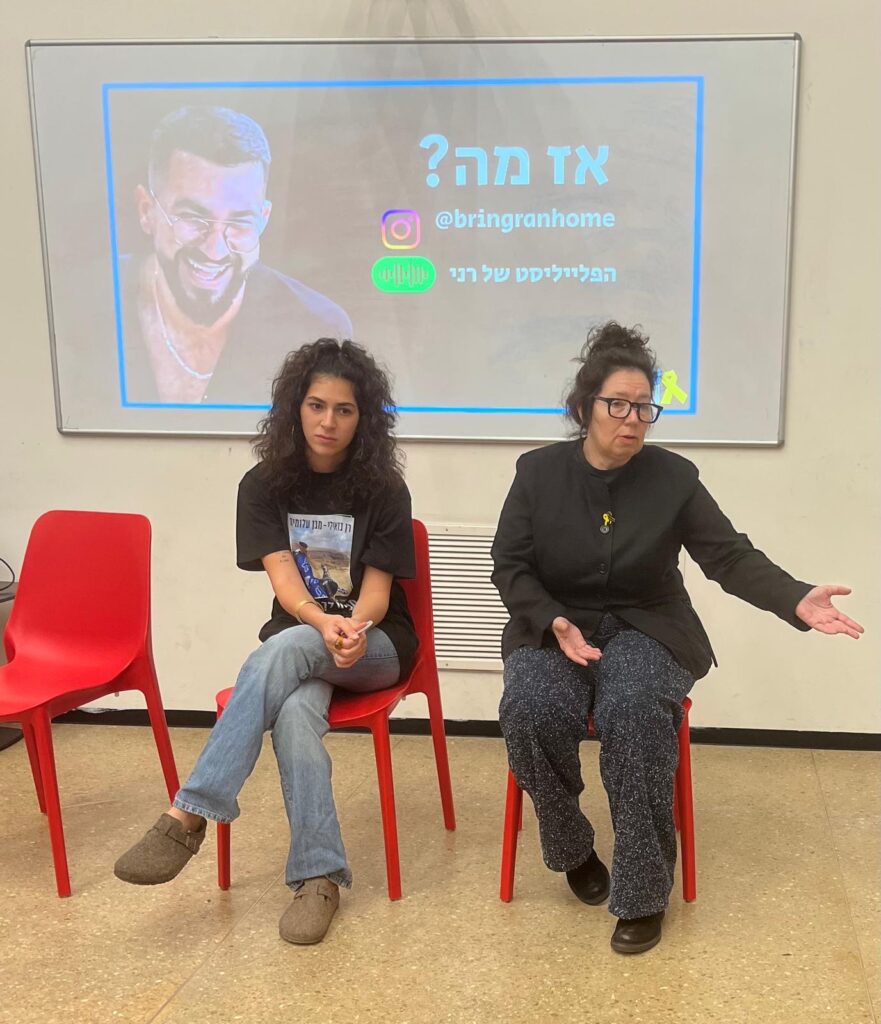
We then spent the afternoon at Hostage Square. We had the privilege to meet Shira Gvili, sister of Ran, whose body is the last held by Hamas of the 251 living and dead Israelis captured that day.
We heard from Rakevet Ginsberg, CEO of Masorti Israel and Emily Levy Shochat, a legendary voice of Masorti activism. Masorti Israel has been deeply involved from the first day, showing up for families that feel abandoned by their government.
We saw the clock still ticking for the last hostage to be returned. Two of our talented members played the black and yellow piano dedicated to Alon Ohel, an Israeli pianist who was kidnapped by Hamas during the Nova music festival attack.
Day 4. December 4. Understanding The Work Ahead
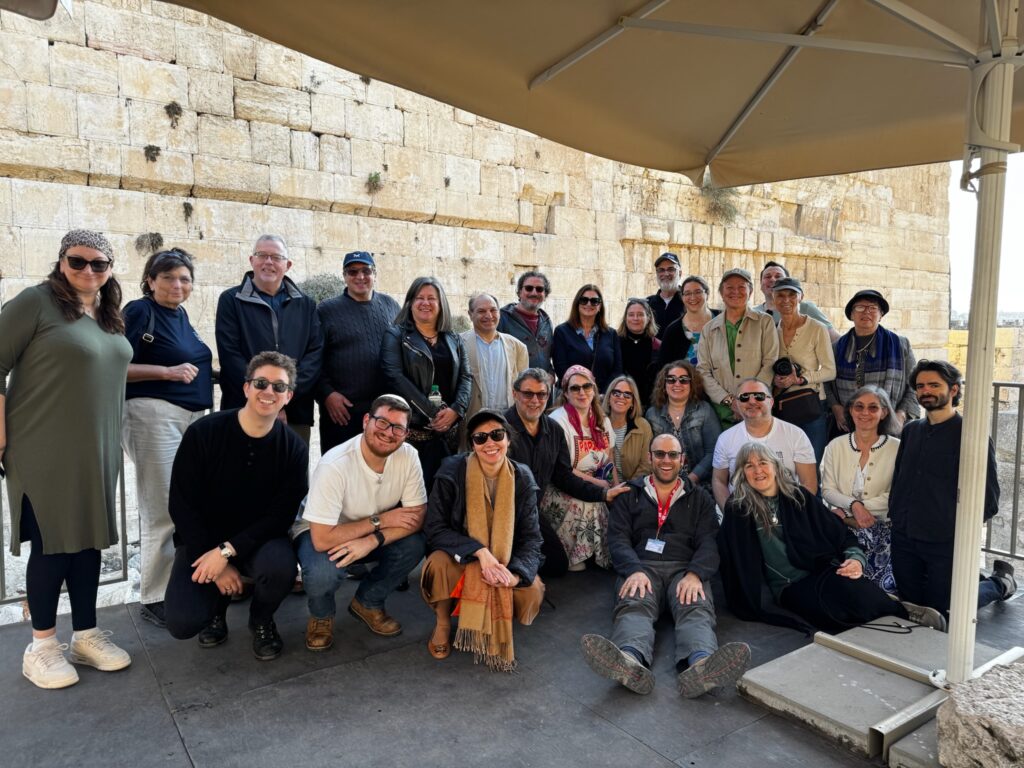
Our final morning began with Shacharit at the egalitarian Kotel, introduced by Masorti Rabbi Sandra and led by Leon Fenster, currently studying at the Conservative Yeshiva, part of the Fuchsberg Jerusalem Centre.
We prayed where our ancestors gathered 2,000 years ago, men and women together. Yet even here pluralism is contested: the Masorti/Reform platform remains physically distant from the actual Kotel, symbolically marginalised, and often subject to harassment.
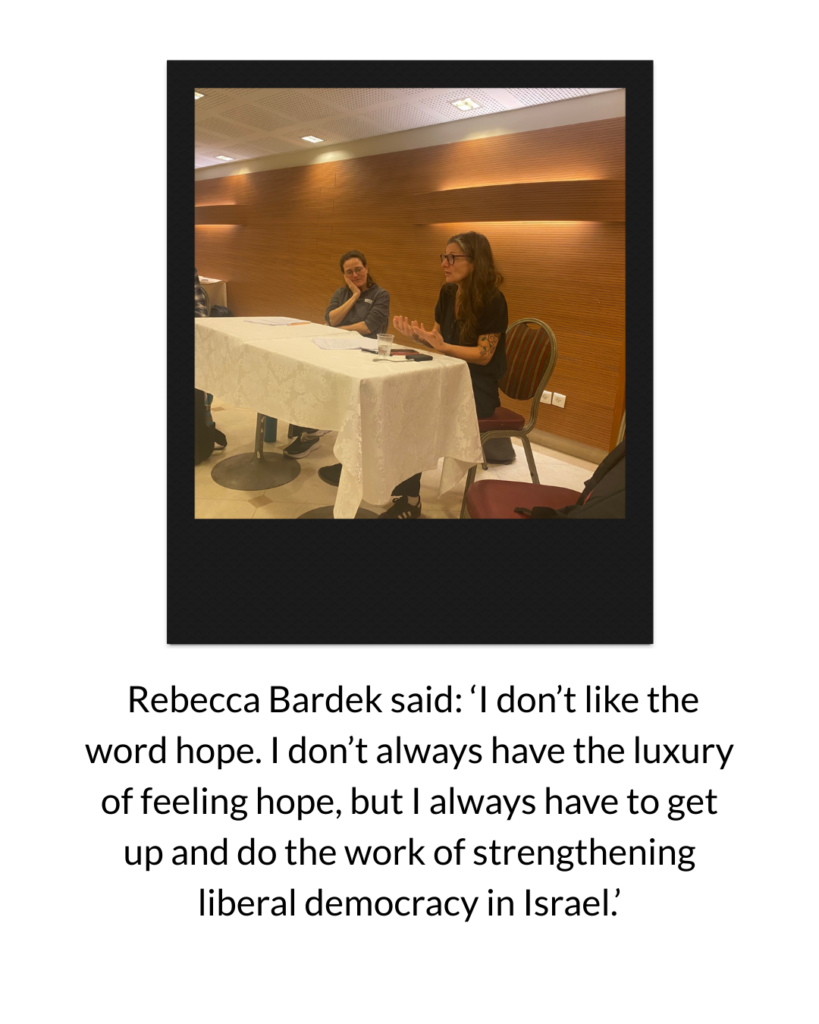
Our closing conversation with Rebecca Bardach, educator and peacebuilder, brought us back to the daily work of building a liberal, democratic Israel. She stressed how for her the work that continues whether or not she feels hopeful.
What We Learned
The themes that emerged were unmistakable:
Trauma
7 October reshaped the Israeli psyche. In private conversations, even those once deeply left-leaning told us trust had been broken, a profound emotional shift that they themselves acknowledge as heartbreaking and hopefully temporary.
Resilience
Communities have rebuilt, farmers replanted, soldiers returned to duty, volunteers filled every gap left by the state.
Division and Democracy
The unity of October quickly gave way to old and new political fractures. Many Israelis fear for the future of their democratic institutions.
Masorti Growth
Despite discrimination from the Rabbanut and limited state recognition, Masorti Israel is flourishing; nearly 100 communities strong, committed to egalitarian, traditional, pluralistic Judaism.
Hope Through Human Connection
Whether through bridge-building (WeAreMENA), community resilience (Sderot and Reim), or democratic activism (Achim L’neshek), Israelis are still reaching for each other.
Where This Leaves Us
We left as witnesses to trauma, courage, activism, grief and resilience, and to people wounded and determined to heal.
In just under 60 hours, we had many intense conversations that surprised us and transformed our lives. Now the true work begins. We need to have these conversations in our UK Masorti communities. We need to deepen dialogue, resist division, and nurture our relationship with Medinat Yisrael, one conversation and one encounter at a time.
We were changed by what we saw.
May we use that change to help heal, strengthen and reconnect our people.